
Hibiscus, Lemon Balm & Holy Basil: Three Herbs That Bring Out the Best in Each Other
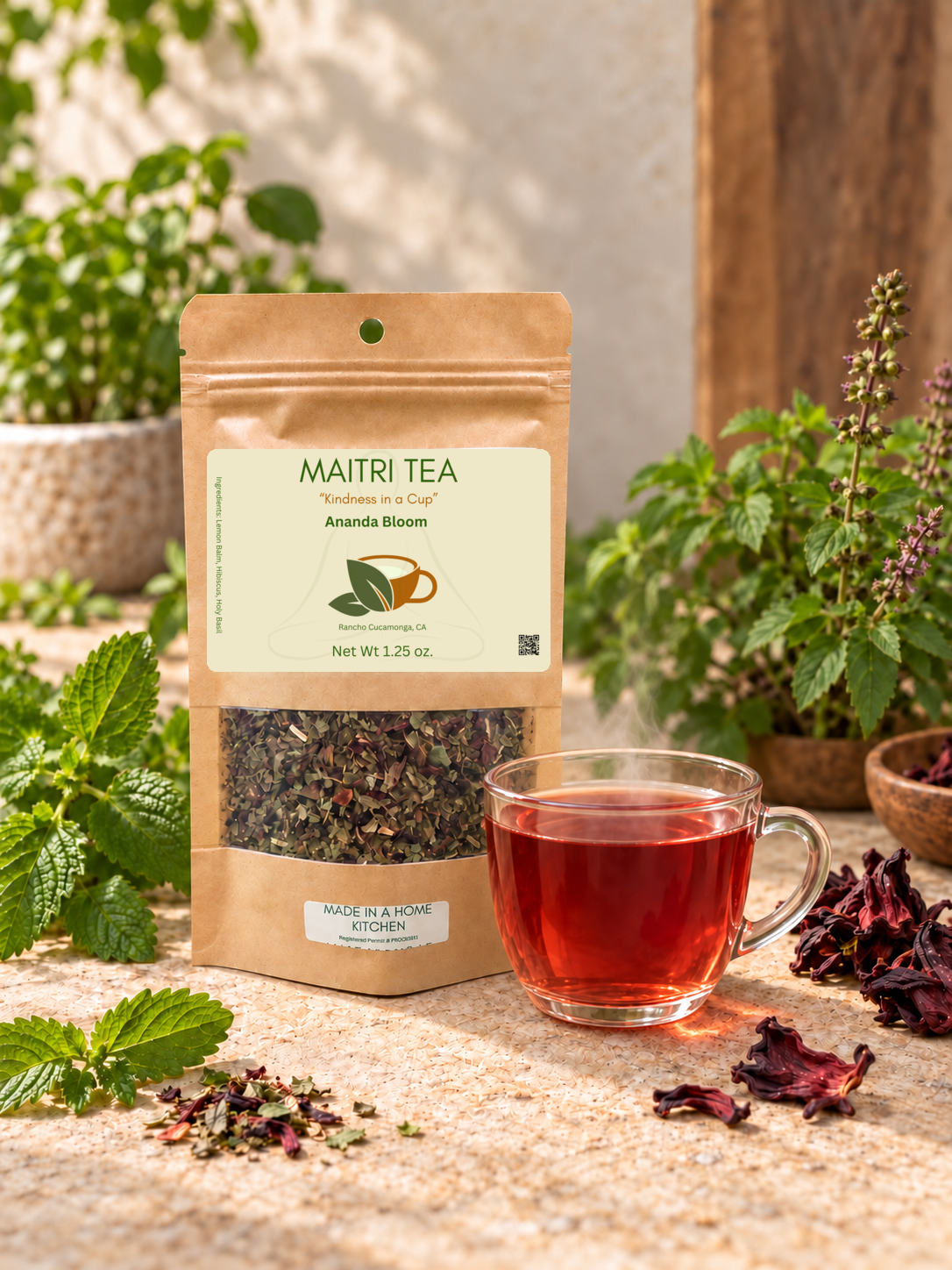
Some herbs seem to have been made for one another. Not necessarily because they taste alike. In fact, sometimes it is just the opposite. One herb brings something the others are missing, and together they create a cup that is more interesting and balanced than any one of them would be alone. That is how I think about lemon balm, hibiscus, and holy basil. They are three very different herbs, each with its own personality, but put them together in the right proportions and something rather lovely happens.
Hibiscus Brings the Brightness
Hibiscus is not a shy ingredient. It gives an herbal tea that unmistakable deep ruby color and a bright, fruity tartness that can almost make you think you’re drinking something made with berries. That tartness is part of what makes hibiscus so refreshing, particularly when served cold, but it can also dominate a blend. Use too much and suddenly every other ingredient seems to disappear behind it. So sometimes the trick with hibiscus isn’t figuring out what to add to it. It’s figuring out what can stand beside it without competing with it.
Hibiscus also has a long history of use as both a beverage and a traditional herbal preparation in many parts of the world. Modern research has taken an interest in hibiscus as well, particularly in connection with cardiovascular and metabolic health. There is meaningful research behind some of these areas, but that doesn’t mean we should turn a cup of hibiscus tea into medicine or make promises about what it will do. For me as a tea blender, the first question is still much simpler: What does this herb contribute to the cup?
Lemon Balm Softens the Edges
Lemon balm has an entirely different personality. Despite its name, it doesn’t taste like squeezing a lemon into your tea. Its flavor is softer and more delicate, with a light citrus aroma and a gentle green, herbal character. Where hibiscus is bold, lemon balm is subtle, and that makes the two surprisingly good companions. Lemon balm doesn’t try to overpower the hibiscus. Instead, it seems to give that tartness somewhere softer to land.
There is another reason I find lemon balm interesting. It has a very long history of traditional use as a calming herb, and modern researchers have begun looking at lemon balm in connection with mood, stress, sleep, and cognitive function. Some of those findings are encouraging, although the evidence is still developing. As with so many herbs, I think there is room to appreciate both the traditional knowledge surrounding the plant and the questions modern research is trying to answer, without pretending that either one gives us permission to make extravagant health claims. Sometimes an herb can simply be appreciated because it makes a lovely cup of tea.
And Then There’s Holy Basil
Holy basil, also known as tulsi, changes the conversation again. Its flavor is difficult to describe in a single word. Depending on the variety, you might notice hints of clove, spice, mint, or pepper alongside its distinctly aromatic herbal character. In a blend with lemon balm and hibiscus, holy basil provides depth. Without it, lemon balm and hibiscus can make a pleasant combination of soft and tart. Holy basil gives the cup another dimension, adding something warm and aromatic underneath the brightness.
Holy basil also has centuries of traditional use in Ayurveda and an important cultural and spiritual history in India. More recently, researchers have studied tulsi for a variety of possible effects, including its relationship to stress and metabolic health. Again, some findings are promising, but much of the research remains preliminary. I think that distinction matters. Traditional herbal knowledge can help us understand why people have valued a plant for generations, while scientific research gives us another way to investigate those traditions. Neither requires us to turn every herb we enjoy into a treatment for something.
Finding the Balance
This is one of the things that fascinates me most about blending herbs. Hibiscus, lemon balm, and holy basil don’t naturally disappear into one another. Each retains its own character, which means finding the right proportions matters. Hibiscus is powerful enough that if I used equal amounts of all three, the lemon balm would have a difficult time making itself known. I wanted something different. I wanted lemon balm to be the foundation, with hibiscus providing brightness and tartness and holy basil adding its aromatic depth.
That eventually became the formula for Ananda Bloom, one of my Maitri Tea blends. I use three parts lemon balm to one part hibiscus and one part holy basil. The larger proportion of lemon balm allows its gentler character to remain present, while it takes surprisingly little hibiscus to provide that beautiful color and lively tartness. Holy basil then fills in the space between them, adding complexity without taking over the cup.
What I like most about the finished blend is that I don’t really think of it as a hibiscus tea, a lemon balm tea, or a holy basil tea. It is the relationship among the three that interests me. One is bold, one is gentle, and one adds depth, and each changes the way we experience the others.
Perhaps that is one of the lessons I keep learning from herbal tea. Good blending isn’t always about finding ingredients that resemble one another. Sometimes it is about discovering how very different characters can complement each other when they are given the right amount of space.
Be well and drink kindly.